Nobody understands a city’s pulse quite like a City Cast host — their knack for spotting what matters proved them to be a reliable voice for 2025’s biggest local stories. Now, we’re turning to them to forecast what’s in store for 2026. From political shifts to data centers, their perspectives offer a candid preview of the issues and surprises that could shape our hometowns.
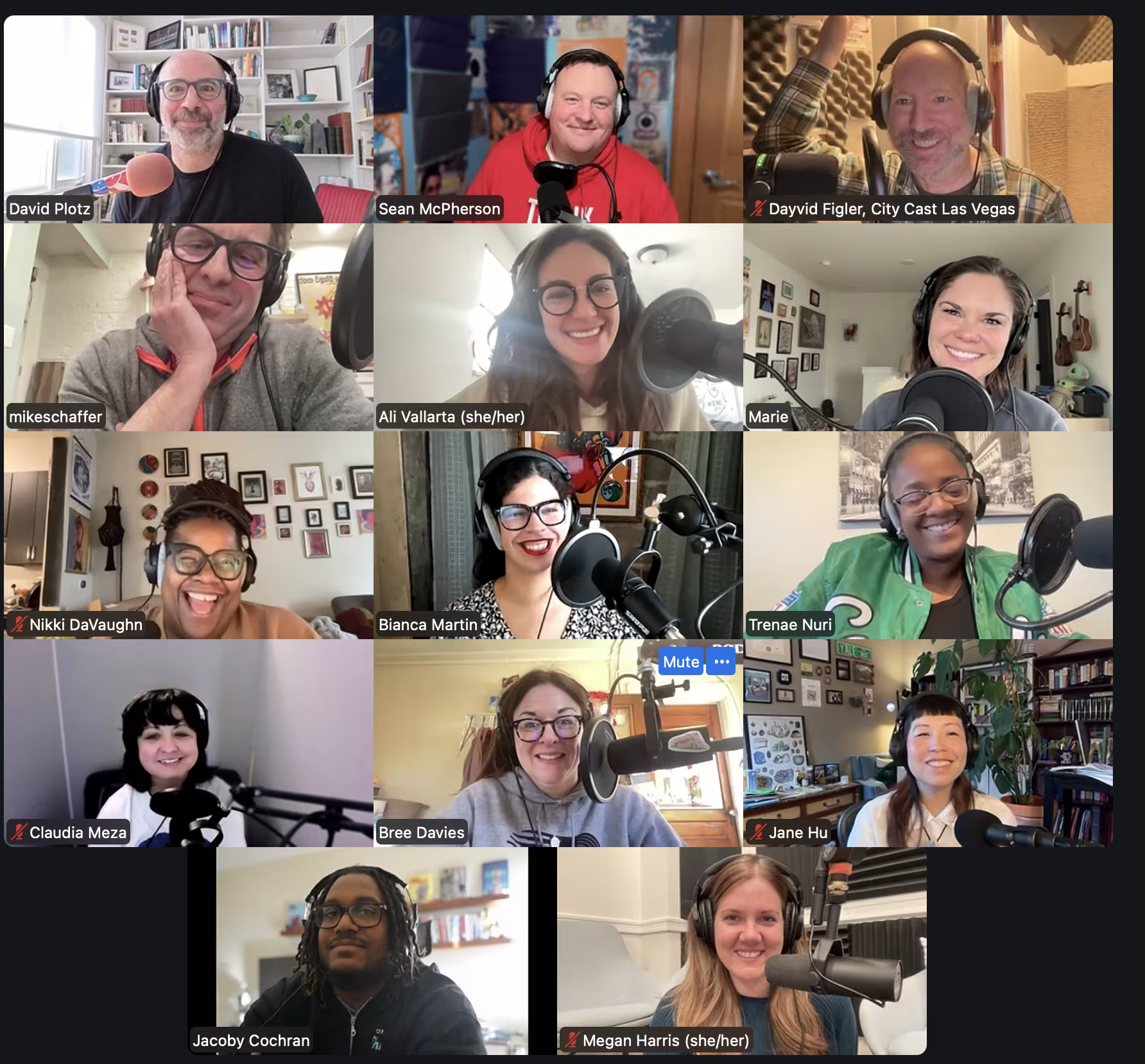
Curious what’s around the corner? Catch their unique insights on our latest podcast episode, where all 13 hosts predicted this year’s biggest stories. Here’s a preview of that conversation:
Local Politics
Zohran Mamdani’s election in New York has energized Democratic Socialists across the U.S. Seattle got a taste of that with the election of Katie Wilson, but it’s yet to be seen if she has the same star power or sway inside City Hall.
City Cast Seattle host Jane C. Hu says the linchpin of Wilson’s election is likely to come with this summer’s FIFA World Cup, as advocates for the city’s unhoused population watch whether Wilson will sweep encampments as previous mayors have.
“It’s going to be interesting to see what she decides there, because there's going to be tension between what people elected her for and what action she’s actually able to take,” Hu says.
Data Centers
Many City Cast cities are seeing a surge in data center development. “It’s going to be a doozy” of a conversation in 2026, as our CEO David Plotz pointed out.
In Madison, the mayor and much of the City Council last year proposed a one-year moratorium on zoning certificates for new data centers while they try to better understand how data centers could impact the electric grid and energy bills. City Cast Madison host Bianca Martin says Madisonians are “up in arms.”
“Folks are concerned that this might be a bubble, that this could be another dot-com bubble where Silicon Valley folks rush in, move to scale, and then they’re like, let’s abandon ship,” Martin says.
But aren’t data centers great for the economy? Plotz posed that question to the group, suggesting that data centers contributed to the tech economy in Washington, D.C. Well, that got the group fired up.
“We’re also talking about doing it in really beautiful green spaces that we don’t want to be cluttered with this kind of nonsense,” says City Cast Pittsburgh host, Megan Harris.
More Stories We Predict for 2026
And the conversation didn’t end there. From an affordability crisis to massive infrastructure changes, here’s what each of our hosts predicted for this year’s biggest news.
Affordability
- For the first time in a long time, a new redistricting map in Utah gives Democrats a safe congressional seat — and candidates are chomping at the bit to announce their bids. But now that they don’t have to court Republican voters, Salt Lake is wondering: Could Democrats explore Mamdani-level progressivism?
- Pittsburgh is going broke. There’s a housing crisis, a stagnant population, and a nearly 50-year-old reputation for economic gloom they can’t seem to outrun. Tax increases may help, but Pittsburgh’s got to figure out how to attract more people if the city ever wants to really evolve.
- Who can afford to live in Austin? With rising homelessness, controversial city spending, and Austin voters overwhelmingly rejecting Prop Q, which would have raised property taxes, Austinites will be focused on what the city is spending on and why it’s not being spent more equitably.
- Portland’s attention is turning to revitalizing downtown. With real estate investment lagging, downtown Portland will likely see an increase in unique, temporary, and creative storefronts as property managers and the city will shift toward a “punk rock mall” model.
Politics
- Several of Chicago and Illinois’ longest-serving leaders are retiring, which could open the door to a competitive primary and potentially transform a new generation of Democratic leadership.
- The Twin Cities, a longtime hub for legal immigration, is facing rising tension as ICE continues to target the Somali community. One Republican state representative has already spoken out against Trump’s rhetoric, but there are also voices supporting the president’s language. Which way will things shift in 2026?
City Development
- Elon Musk’s The Boring Company is building twin 9.5-mile tunnels for Teslas between downtown Nashville and the airport, with future extensions proposed. Is this the right move for Nashvillians? In 2026, locals will continue to question safety, oversight, and a lack of geological testing, especially considering the city’s limestone terrain is vulnerable to sinkholes.
- The City of Denver wants to help build new stadiums for the Broncos and its first National Women's Soccer League team, sparking debates over public funding, community benefits, and transparency. Pushback includes concerns about backroom deals and threats from NWSL owners to leave if demands aren’t met. The teams are promising huge economic impacts for the whole city. We expect Denver to look very different in the years to come.
- Washington, D.C.’s future as a federal government hub is uncertain amid mass firings, agencies possibly relocating, and a Supreme Court case threatening civil service rules. The city’s economy, housing market, and politics all hinge on whether the federal workforce remains.
Tourism
- This is going to be the biggest year of tourism for Philadelphia in our lifetime. Driven by increased marketing efforts and major events, including an NCAA tournament, MLB All-Star Game, FIFA World Cup, and the 250th anniversary of the nation’s founding, Philly is determined to expose the world to the city.
- Nevada’s new crime bill, which goes into effect this year, will allow judges to “order out” anyone with a criminal charge from the Las Vegas Strip. What are the implications for the city’s tourist corridor when individual rights are sacrificed for the goal of encouraging tourism? And how could similar bills affect tourism nationwide?